At the Digital CX Summit 2026, Shene Mothilal, Solution Owner for Digital Money Manager at Standard Bank, set out a clear and practical case study of how the bank turned one year of transactional data into a short, personal story that customers wanted to watch, share and act on.
“What if understanding your money felt as effortless as watching a story — your own story?” Shene Mothilal asked at the Digital CX Summit 2026.
Standard Bank introduced its new Money Reels feature, transforming your 2025 financial activity into a personalised recap. Designed as a highlight reel of your spending, it lets you revisit a year of swipes, taps, and savings, bringing key moments back into focus. Whether it’s memorable purchases at your favourite stores or investments that support your future goals, everything is captured in one place within the app. SB Money Reels also offers useful insights into customerrs past spending, helping them make more informed financial decisions going forward.
The problem they set out to solve
Mothilal made it plain that the bank did not lack data; it had more transaction records, credit information and behavioural signals than ever before. The real problem was that those numbers rarely connected emotionally with customers, and without that connection insights did not lead to lasting change. In South Africa the context was stark, many households carry heavy debt burdens and most people do not save enough for retirement, while financial education is not embedded in the school system. Standard Bank recognised that traditional statements and static dashboards were often too complex or uninspiring, and that customers needed something familiar, simple and emotionally resonant to move from awareness to action.
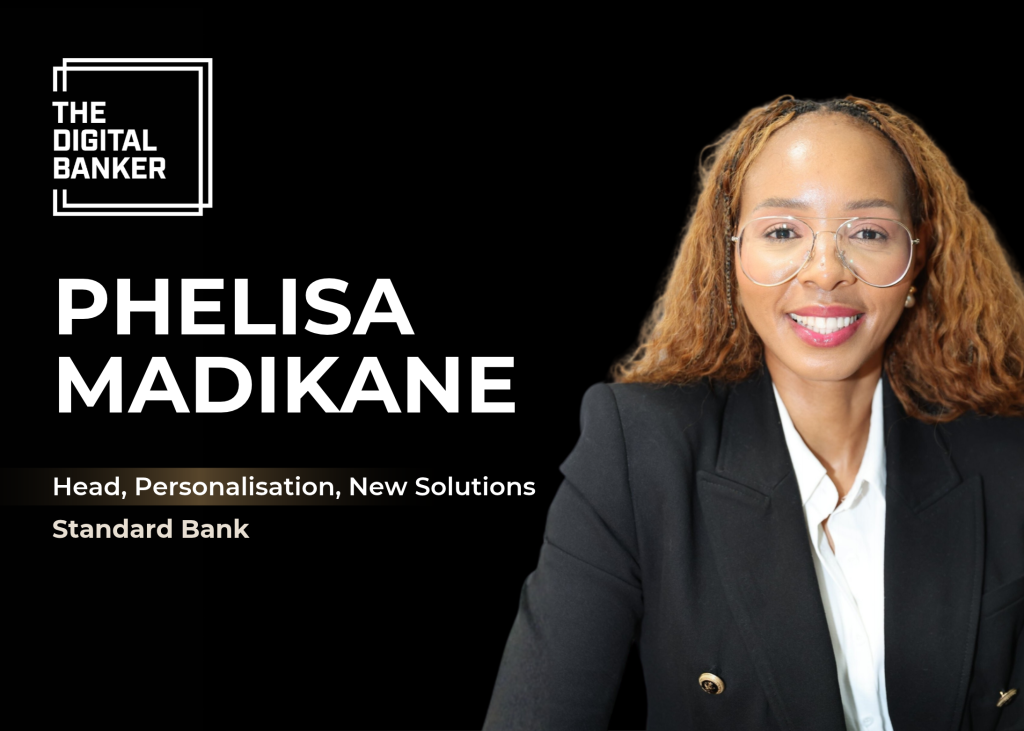
 Shene Mothilal , Solution Owner: Personalisation, Digital Money Manager at Standard Bank
From digital money manager to money reels
The work began with the bank’s in‑house Personal Financial Management product, Digital Money Manager, which already offered practical features to help customers plan for upcoming payments, understand and improve credit scores, track cash flow and manage budgets. Those PFM features had already driven measurable engagement, with the bank reporting earlier that customers using PFM tools logged in more frequently and interacted more with the app. The team asked how to take that engagement further, and the answer was to package a year of transactional and behavioural data into a short, social media‑style reel.
Money Reels was designed as a year‑in‑review for money, delivered inside the mobile banking app in a format inspired by social media. The product converts twelve months of transactions and PFM insights into a short, swipeable narrative that highlights spending peaks, savings milestones, credit score changes and meaningful life moments such as buying a home or repaying a loan. The design combined narrative data visualisation, behavioural insight modelling and an emotional design layer so that numbers carried context and meaning rather than reading as dry statistics. The engineering approach prioritised speed and accessibility, using a cloud‑based architecture to deliver a multimedia experience that worked even on lower‑end devices common across the bank’s markets, and the team moved from concept to production in roughly three months.
 Money Reels was designed as a year in review for money
Human‑centred design and behavioural science
Mothilal emphasised that Money Reels was not a gimmick but a carefully engineered blend of data science, behavioural economics and human‑centred design. The team deliberately used the data already available from the PFM product so they could move quickly to market, while investing in the behavioural modelling that would nudge customers from insight to action. The reels were tested and refined with customers, and the content blocks were designed to be personally meaningful, showing not only where money went but what those patterns meant for a customer’s life. As Mothilal put it, the aim was to help people “feel seen and understood, not just banked.”
Building the feature was only the start; scaling its impact required a coordinated marketing and brand strategy. The launch followed a two‑phase approach, beginning with an in‑app feature announcement and then moving to a broader social amplification that shared community‑level insights and encouraged customers to compare and share their own reels. The campaign leaned into social formats and channels to spark organic sharing and curiosity, and the bank worked closely across product, data engineering and marketing teams to ensure the experience was both technically robust and culturally resonant. The goal was to make Money Reels a conversation starter and to embed financial reflection into popular culture rather than confine it to a static report.
Measurable outcomes and business impact
The results were substantial and measurable across reach, engagement and product adoption. Nearly 450,000 customers engaged with their Money Reels and the completion rate for those journeys was 80%, which showed that once customers started the experience they tended to finish it. The campaign generated over 25 million social media impressions and approximately 875,000 marketing interactions, while more than 400,000 reels were viewed during the campaign window. Crucially, Money Reels drove product adoption: the initiative resulted in roughly 175,000 new installs of the Digital Money Manager PFM features, and customers who used PFM tools logged into the app 24% more frequently and were 19% less likely to attrite from the channel. The launch also contributed to 537 new banking app installs, and almost a quarter of engagement came from customers aged over 50, showing that the format reached demographics not traditionally associated with digital savviness.
Unexpected wins and demographic reach
The team observed that Money Reels did not simply show customers numbers; it moved them emotionally and practically. Social posts from customers ranged from surprise to delight, and many users reported a clearer understanding of where their money went and what small changes might free up cash for saving. The campaign’s social reach amplified that effect, turning individual insights into public conversation and normalising financial reflection in a way that felt light‑hearted rather than shaming.
One of the most striking outcomes was the breadth of appeal. The team had expected the reels to resonate mainly with younger users, but the format proved popular across age groups. Millennials found the content efficient and relatable, while older customers described it as simple and intuitive. For many people, Money Reels was the first time they could see their financial year reflected back in a way that made sense to them, and that emotional connection helped shift the role of the mobile app from a transaction tool to a place for meaningful engagement.
Mothilal framed Money Reels as a capability rather than a one‑off campaign. The project advanced the bank’s digital maturity in several ways, strengthening data aggregation and analytics pipelines, improving behavioural modelling frameworks and testing a process for creating data‑driven personalised content blocks that can be reused across channels. The initiative elevated the app’s value proposition by introducing hyper‑personalisation and blueprinted a new digital capability that will be leveraged in other use cases, including non‑app platforms. The team also used the launch to collect new data points, such as customers’ self‑declared “Money Energy” for the coming year, which can feed future personalisation and journey design.
The roadmap and what comes next
Money Reels is set to evolve beyond the year‑in‑review. The bank plans to extend the concept into new dimensions of insight, to use the personalised content blocks for nudges and goal setting, and to embed the reel format into other parts of the customer journey. Mothilal described the reel as “a new mode of communicating data and advanced analytics content blocks to customers,” and the team sees it as a future‑ready asset that unlocks possibilities for clients, the bank and the teams who will build the next wave of innovations. The fact that competitors followed months after the release is taken as validation that the idea tapped into a broader shift in how people expect to consume personalised content.
Humanising finance data
“Data becomes experience when it feels familiar, when it is easy to understand and when it connects emotionally”.
Money Reels shows that analytics can be empowering rather than overwhelming, and that banking can be part of everyday life in the same way as the apps people already love. The initiative delivered clear business outcomes — high engagement, strong completion rates, significant social reach and measurable increases in PFM adoption — while also changing how customers feel about their money. As Mothilal put it, the bank did not just build a feature; it changed how customers see, feel and understand their money, and that is the kind of change that matters to people and to the future of banking.