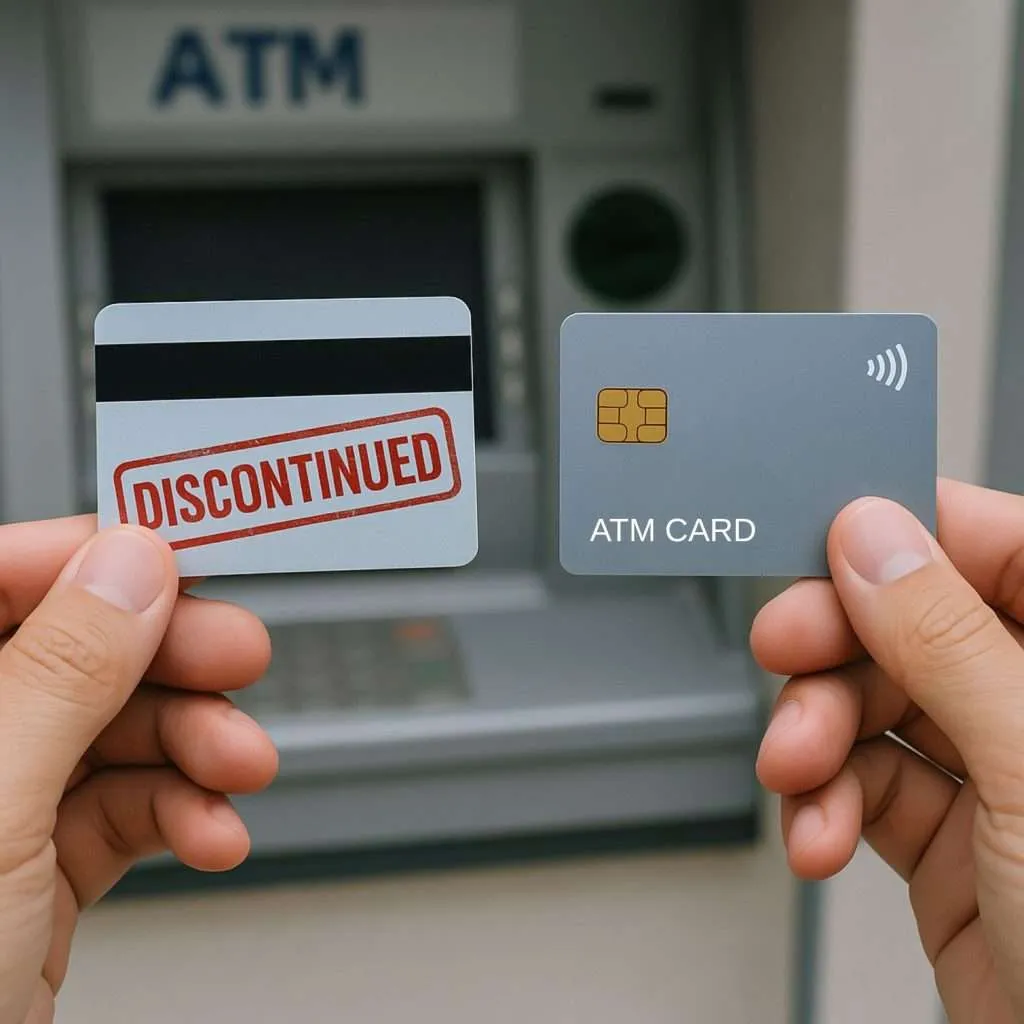
Vietnam’s central bank is taking a definitive step to modernise its banking infrastructure. As of 1 July 2025, all magnetic stripe ATM cards will be permanently disabled, marking the final phase of the country’s transition to chip-based and digital payment technologies.
This shift is not sudden. The State Bank of Vietnam (SBV) first outlined the transition in December 2020, when it released a draft amendment to Circular 19/2016/TT-NHNN. That early directive aimed to ban the issuance of magnetic stripe cards after 31 March 2021, and called for the full migration to EMV-compliant chip cards by the end of 2021. While that initial push laid the groundwork, compliance was uneven, and many banks retained hybrid cards or delayed full implementation.
To close these gaps and enforce compliance uniformly, SBV issued Circular 18/2024/TT-NHNN on 28 June 2024, which formally mandates the complete disablement of magnetic stripe functionality by July 1, 2025. This regulation applies even to dual-interface cards unless upgraded, and prohibits the use of magnetic stripes in all transactions—from ATM withdrawals and POS payments to interbank transfers.
Even hybrid cards that carry both a chip and a magnetic stripe will be rendered useless unless upgraded.
Pham Anh Tuan, Director of SBV’s Payment Department said: “After assessment, we found that many criminal organisations are still taking advantage of the use of magnetic cards to steal data through skimming at ATMs. On that basis, the State Bank decided to completely stop accepting magnetic cards in transactions from 1 July 2025.”
A security-driven mandate
The shift is rooted in security and long-term resilience. While magnetic stripe cards store static data that can be easily duplicated, chip cards use EMV (Europay, Mastercard, and Visa) technology to generate dynamic transaction codes, making data theft significantly more difficult.
“With chip card technology, criminals will not be able to steal customer information when making transactions through automatic machines and POS,” Tuan added. “This contributes to creating peace of mind, security and safety for customers when making payments.”
Vietnam is not alone. The global banking industry is in lockstep. Mastercard, for instance, has committed to removing magnetic stripes from all new cards in Europe starting 2024, with a full global phase-out by 2033. The European Union and countries like the Netherlands and Ireland had already moved to chip-only systems a decade earlier. In North America and Asia, contactless and EMV payments have become standard, with magnetic stripe use increasingly relegated to fallback scenarios. Even transit fare systems in cities like Tokyo and New York have begun retiring magnetic card formats in favour of more secure IC and contactless technologies.
The change also reinforces Vietnam’s push toward a cashless economy—an ambition accelerated during the pandemic years and now supported by a maturing fintech ecosystem and improved regulatory infrastructure.
Economist Dr. Nguyen Tri Hieu backed the move, calling it “necessary to improve the quality of the payment system,” but warned of one major risk: “If not properly publicised, people can easily become victims of sophisticated scams. The role of commercial banks is extremely important in guiding and supporting users to follow the correct process.”
Banks accelerate transition
In response to the directive, many banks are proactively phasing out magnetic stripe cards well ahead of the July 2025 deadline. The goal: eliminate vulnerabilities in the system and ensure customers are not exposed to cyber threats or transactional disruptions.
ACB halted the use of both international and domestic magnetic stripe ATM cards back in September 2024. Eximbank followed suit by discontinuing its V-TOP magnetic payment cards, citing both security and efficiency concerns.
Sacombank, one of the earliest adopters of chip technology, stopped issuing magnetic cards in 2017 and has since been gradually deactivating cards with minimal transaction history.
“The magnetic strip stores sensitive cardholder data that can easily be cloned using skimming devices,” Sacombank said in a statement, adding that chip cards offer superior protection through dynamic encryption.
Experts agree that the shift is a net positive for consumers. Unlike magnetic stripes—where data is stored statically and encrypted only once—chip cards generate a unique transaction code for every payment. This renders stolen card data useless, since the code cannot be reused.
For cardholders who haven’t yet converted, the process is simple: visit a bank branch with a valid ID, cancel the old card, and request a new chip-enabled one—free of charge.
In Lào Cai province alone, MB Bank has already converted over 140,000 cards, while Agribank’s local branch has upgraded its infrastructure with 14 chip-enabled ATMs and 130 POS terminals.
No conversion, No transactions
After 1 July 2025, any unconverted magnetic card will effectively be bricked. That means no cash withdrawals, transfers, or payments—whether via ATM, CDM, POS, or interbank channels. In some cases, banks may pre-emptively lock cards to prevent fraud, potentially disrupting personal finances for anyone who hasn’t made the switch.
Commercial banks are ramping up awareness campaigns and increasing conversion support, both at branches and through digital channels, to ensure a smooth nationwide rollout.
Beware of scams
The transition has also become fertile ground for fraudsters. The SBV has issued multiple warnings about fake bank agents calling or texting customers to extract OTPs, account numbers, or PINs under the guise of “assisting with card conversion.”
Banks have reiterated that they do not:
- Request personal information or OTPs by phone or SMS
- Send staff to customer homes to replace cards
- Use unofficial links for card conversion
Customers are advised to rely only on official channels for card upgrades.
How to convert your card
To facilitate conversion, banks are offering three primary methods—all free of charge:
- In-branch: Bring a valid ID to the nearest bank branch or transaction office.
- Mobile banking: Many banks (e.g., Vietcombank, BIDV, Techcombank, Sacombank) offer online registration and delivery or in-branch pickup.
- Hotline support: Call your bank’s customer service hotline for advice and guidance.
Implications for FDI enterprises
While the regulation largely affects retail banking customers, foreign direct investment (FDI) enterprises should also take note. Some firms still rely on magnetic stripe cards for salary disbursements or local payments—posing potential compliance issues and operational risks.
There are also recurring errors in banking setup among FDI firms, such as using ordinary payment accounts instead of Direct Investment Capital Accounts (DICAs). These oversights can result in regulatory breaches, delayed fund transfers, or difficulties repatriating profits.
Advisors recommend a full audit of account structures and documentation to ensure legal compliance—particularly ahead of the July 2025 cut-off.
Vietnam’s decision to retire magnetic stripe cards marks the end of a vulnerable legacy system—and the start of a safer, smarter payment era. For consumers and businesses alike, the takeaway is clear: convert early, stay informed, and trust only official sources. By July 2025, if your card still has a stripe, it won’t swipe.